
“Although many of us may think of ourselves as thinking creatures that feel, biologically we are feeling creatures that think.” — Jill Bolte Taylor
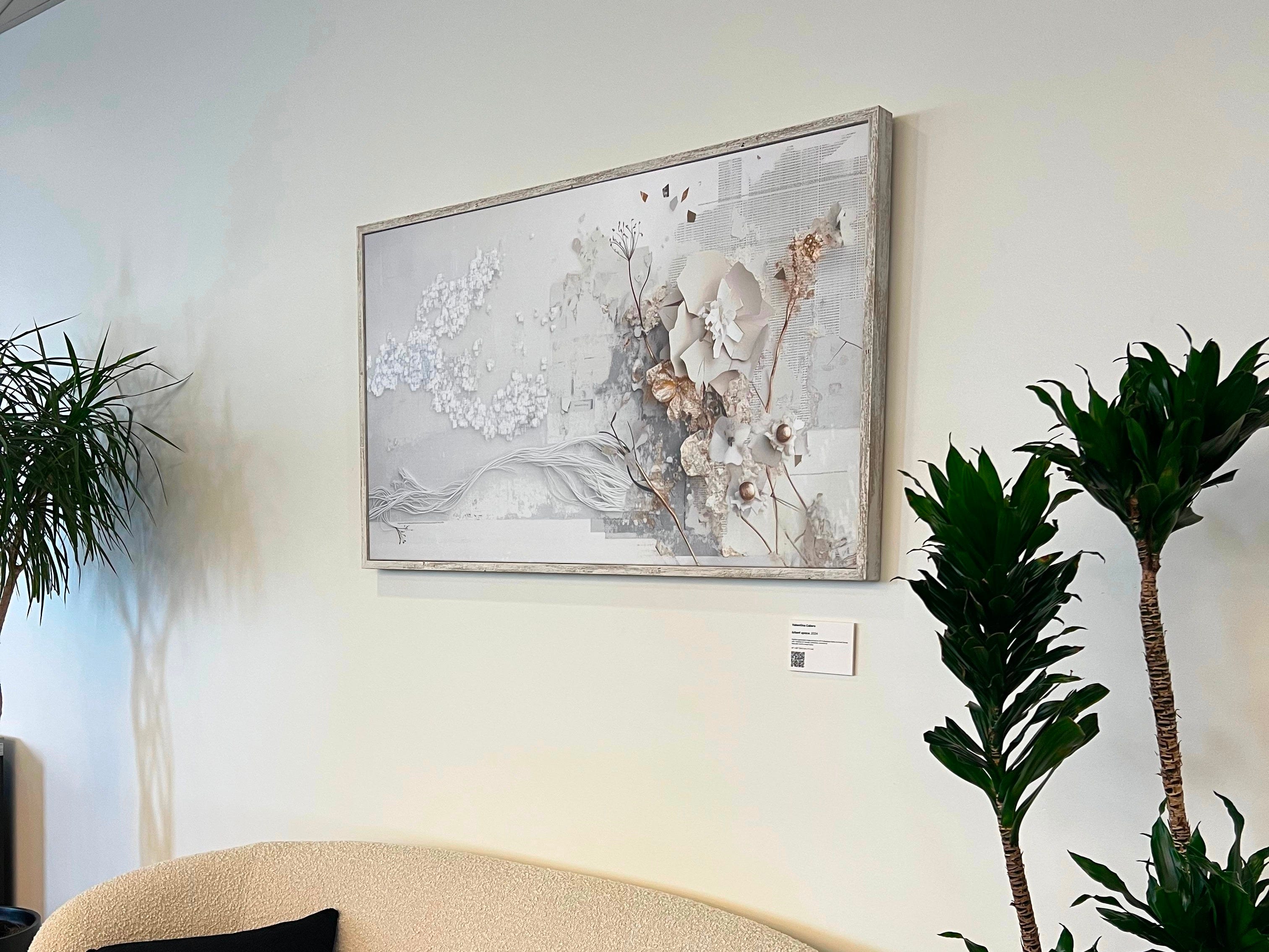
January was a month filled with art and inspiration. I hopped from one gallery to the next during SF Art Week, moving through exhibitions and special events like curator-led tours. It was an opportunity to research what other contemporary artists are exploring and connect with the community.
One of the best solo exhibitions I stumbled upon was by Gretchen Andrew, an American artist who left a career at Google to pursue painting. Her practice merges traditional oil painting with AI-driven image modification, custom robotics, and algorithmic interventions in physical media.
Through her series Facetune Portraits, she explored the ways AI-generated beauty standards reshape natural features. She created base layers of oil-painted portraits using a specialized oil paint printer. This foundation was then modified by custom-built robotics programmed to apply Facetune-style alterations directly onto the wet paint.
What caught my interest is the physicality of her process. Normally, beauty filters subtly modify faces in real time, and we lose the “chronology” of changes on our screens. They are, de facto, invisible. But in Facetune Portraits these transformations are made tangible and irreversible. The robotic brushstrokes permanently embed algorithmic beautification into the canvas itself.
This made me reflect on how digital beauty standards usually operate in the background. Instead, here they are made explicit, mechanized, deliberate, and permanently imprinted in oil paint.
Another highlight was FOG Design+Art, an annual event that celebrates innovative design and visual arts. There, I listened to a conversation between Ivy Ross, Chief Design Officer for Consumer Devices at Google, and architect and former design journalist Takashi Yanai. The focus was on how the arts and aesthetic experiences can reshape our brains, improving well-being and cognition.
Ivy spoke about a Google exhibition, A Space for Being, which explored how different room aesthetics impact our well-being. People were invited to experience three rooms, each uniquely designed, while wearing biometric wristbands that measured their physiological responses. In the end, participants were shown which space made their body feel most at ease. This illustrated that our environments affect our emotions, energy, and stress levels. It comes down to how a space feels, more than what we see rationally.
Ivy co-wrote Your Brain on Art with Susan Magsamen. They write that:
Art actively rewires the brain, fostering neuroplasticity for anyone who engages in creativity.
Aesthetic experiences can reduce cortisol levels, lowering stress in as little as 45 minutes of creative activity.
Even a single art experience per month (like a museum visit) can extend life by a decade.
Art isn’t just self-expression. It actively shapes the way we think, feel, and experience the world; it can be therapeutic.
During the Q&A session, someone pertinently asked about AI’s role in creativity. Ivy answered:
“I think the machines will be doing some of the rational things for us, and it’s time we exercise our imagination and creativity to levels we didn’t have to do before, in order to co-create back with the machines and bring us together to a new level [of creativity]. I think it’s going to push us to a different place. My perspective on it is that it will make us in the end more imaginative and creative.”
She also compared AI to the early days of digital photography, when photographers were scared but ultimately discovered new possible creative combinations. It’s a perspective I share: this is about reallocation. AI challenges where we spend our energy, and this shift has the potential to make us more creative.