
Two months ago I was in my hometown, at a digital printing studio. Emanuele, the artist who runs it, looked closely at one of my artworks and said: “This reminds me of LiDAR visuals. Have you ever seen the Radiohead music video?” I typed lidar radiohead into my notes and left it there.
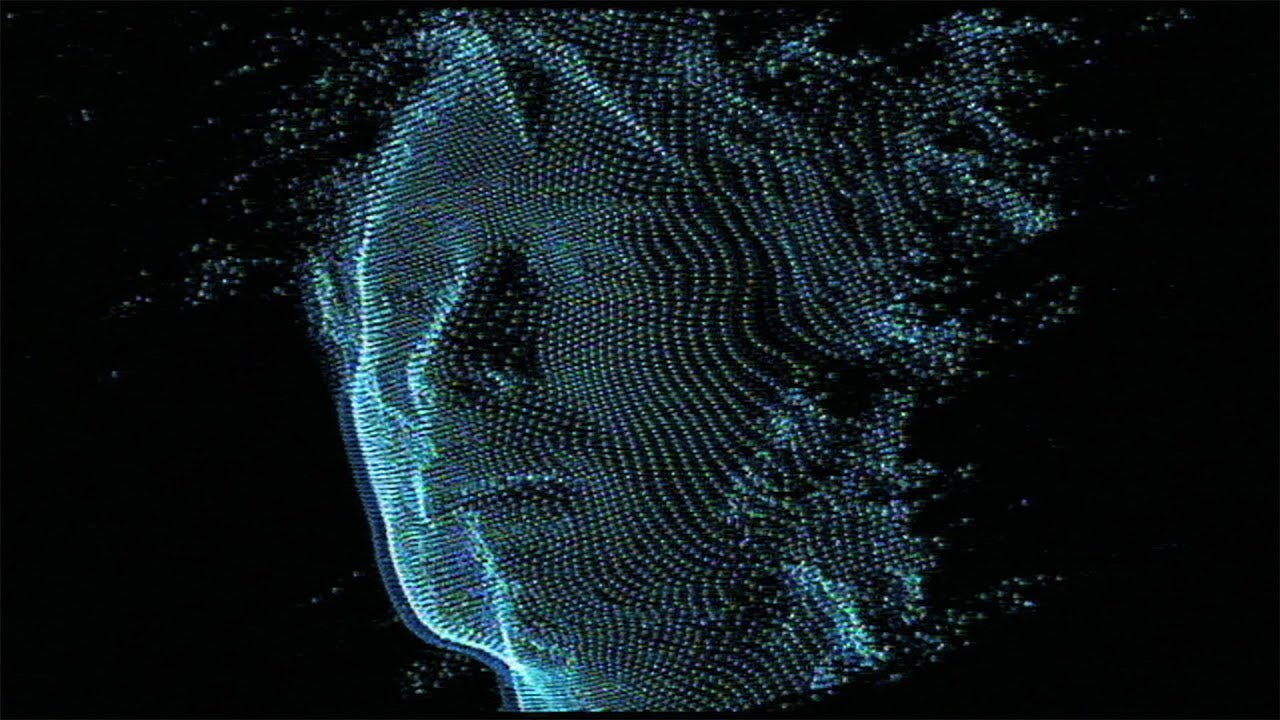
After watching “House of Cards” from 2008, I looked at how it was made. The exteriors were captured with LiDAR, and the faces with a structured-light 3D scanner. No cameras or conventional lights were used.
LiDAR sees the world by measuring distance. It sends out pulses of laser light and times how long they take to bounce back, building a map of its surroundings through pure geometry. The data are then rendered as points suspended in a digital space. Effectively, reality gets abstracted into coordinates.
In Radiohead’s video, the singer’s face is rendered as points of light. The scan stripped away the surface to reveal the structure beneath, and Thom Yorke feels more fragile and temporary for it. Nothing in the video was seen by a human eye, and yet I glimpse a human vulnerability deeply embedded in it.
This resonates with my practice because LiDAR does physically what I attempt conceptually. It translates the visible world into mathematical space by converting physical reality into clouds of data points, while I transform poetry into numerical coordinates through embedding models. Both approaches reveal the mathematical skeleton beneath surface appearances. When I added “LiDAR scanning” to one of my prompts, the result felt so fresh, like a piece of the puzzle had finally fallen into place.
What fascinates me is how this technology ends up highlighting what’s most human. When you see a face rendered as floating points in space, you’re seeing both its mathematical reality and its ephemeral nature. It’s there and not there.
a book
The Case Against Reality: Why Evolution Hid the Truth from Our Eyes by Donald D. Hoffman
Hoffman argues that our perception evolved to hide the structure of the world. The idea is that evolution rewards seeing what’s useful, and what we call reality might be an interface to keep what’s true out of our view.