
Last week, something happened online. GPT-4o can now generate a Studio Ghibli version of any image. Nearly any style can be applied, but this one went viral. On one side, there was excitement and wonder; on the other, panic, anger. Fatigue. The way this AI feature was used prioritized speed, aesthetics, and trend-chasing over originality and depth. Profoundly ironic, considering it mimics a visual style that was born from thousands of hours of hand-drawn labor and attention to detail.
To me those images are closer to decoration than to art. They’re visually pleasing but they don’t carry substance. That’s not to say decoration is bad. Sometimes decoration brings comfort, joy, nostalgia. It can soothe, and it can delight. But it doesn’t have to mean anything. AI-generated images aren’t art on their own, no more than a camera roll is art by default. They become art when someone gives them meaning, and a reason to exist.
AI can be part of a creative system, surprising us into new directions. But collaboration isn’t authorship. An artist has the ability to intend, to choose, to care. A model doesn’t know what it’s making, or why. What a model offers is possibility. What we bring, through selection and interpretation, is what gives the work its substance.
The machine isn’t replacing the artist. It’s waiting for one.
What we witnessed last week was a democratization of aesthetics. People who had never heard of Studio Ghibli were suddenly introduced to its expressiveness, emotional range, and visual poetry. Some of them may now discover the actual films of Miyazaki. That’s an unexpected side effect, though he might hate it.
The world is shifting faster than we can process, and we all respond differently. But in a world of niches, we don’t need to adapt perfectly. Painters didn’t vanish after the invention of the camera. People will continue to gather around slow art. Around soul. What matters is asking the right questions: What should we preserve? What should we release?
While my liminality collection is ongoing, I’m working on a new series: eidetic images.
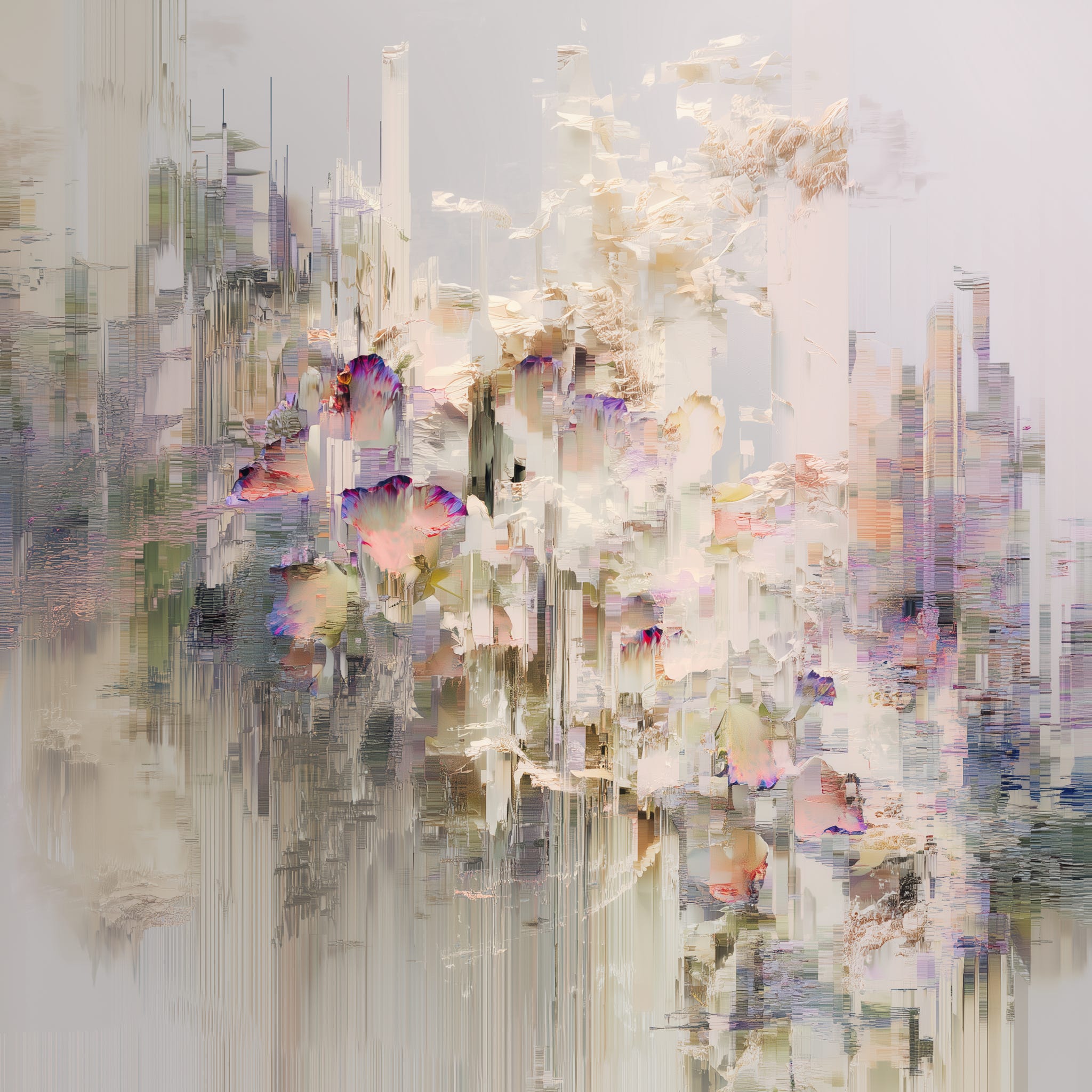
“εἶδος” (eîdos) is a Greek word that means essence or form. In this series, eidetic images are vivid mental snapshots infused with sensory details and personal meaning, shaped by perception and time. Fragments that exist between memory and imagination.
I’m exploring how AI can alter and reshape a memory.
Remembering is already an act of collaboration: between past and present, self and environment. If our most vivid mental images are already collaborations, what happens when AI joins the conversation? That’s the question I’m asking myself. When I linger with one image, it starts telling me something I hadn’t thought, fully grasped, or felt before.
a book
Wabi-Sabi for Artists, Designers, Poets & Philosophers by Leonard Koren
Wabi-sabi is a Japanese aesthetic that speaks of the beauty of impermanence, imperfection, incompleteness. The book is in itself an example of wabi-sabi.